
The reasons why the right Stainless Steel Fittings important?
A major constituent of current piping systems is Stainless Steel Pipe Fittings, which prevent the loss of strength, seal tightness, and durability of piping. Top 5 Factors to Consider When Buying Stainless Steel Pipe Fittings, It does not matter whether you are an engineer, plant manager, or a member of the procurement department; the possibility of specific Fittings should be properly selected so that operations may be run smoothly, safely, and without periods of unforeseen accidents or additional expenditures.
In chemical processing plants and in food-grade applications, the use of high-quality SS Pipe Fittings is being increasingly used. However, in case the materials consist of an enormous number of pressure levels and different types of connections, it is not always simple to select the one that is correct. This guide will disaggregate the best five aspects that you need to consider before you can buy Stainless Steel Pipe Fittings online, which will assist you in making well-informed, cost-effective decisions.
1. Material Grade and Corrosion Resistance
The most significant and the first one is the choice of the material grade. Stainless Steels do not all perform the same way in various conditions.
Common Grades:
- 304 Stainless Steel: A sensible and economical option that is usually used in daily applications.
- 316/316L Stainless Steel: Provides greater corrosion resistance and is thus suitable in harsh, chemical, or marine applications.
Key Considerations:
- Exposure to chemicals or saltwater
- Temperature conditions
2. Type of Fitting and Application Compatibility
Fittings to be applied in the various applications differ. The incorrect type can be used, which can compromise the efficiency and safety of the system.
Common Types:
- Strauss steel tee Fittings threaded – Easy to install, put in low-pressure systems.
- Butt-weld Fittings – High pressure, permanent, and strong.
- Sanitary Stainless Steel Fittings – These were to be applied in a hygienic environment, such as food and pharma.
Ensure that the type is of the right size:
- Pressure requirements
- Installation method
- Maintenance needs
3. Pressure Rating and Standards Compliance
Piping systems are all placed under some form of pressure and temperature. It can lead to failure since Fittings not necessary to match the standards are used.
Check for:
- ANSI/ASME ratings
- ASTM material standards
4. Connection Type: Threaded vs. Welded
Choosing the type of connection, performance, and cost of installation depends on it.
| Feature | Threaded Fittings | Butt-Weld Fittings |
| Installation | Easy, no welding required | Requires skilled welding |
| Strength | Moderate | High |
| Leak Resistance | Moderate | Excellent |
| Maintenance | Easy to replace | Permanent connection |
| Best Use Case | Low-pressure systems | High-pressure, critical systems |
Threaded Fittings come in handy in cases where getting the right installation is always fast and simple, and welded Fittings are more solid and permanent when used over a long period.
Stainless Steel 304 vs 316 Stainless Steel Simple Comparison
| Property | 304 Stainless Steel | 316 Stainless Steel |
| Corrosion Resistance | Good | Excellent |
| Cost | Lower | Higher |
| Chloride Resistance | Limited | High |
Conclusion
Working on the material grade, fitting type, pressure rating, connection method, and supplier reliability will help, to a large extent, minimize operation risks and maintenance expenses.
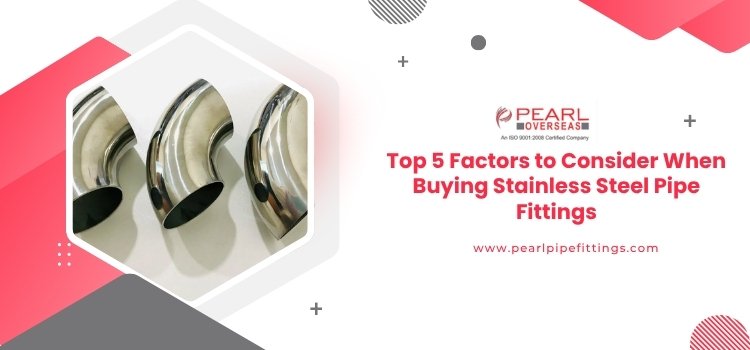
You can find 316L Stainless Steel Elbows, sourced for corrosive conditions, along with threaded Stainless Steel tee Fittings, which are easily installed, and making an informed decision will pay off eventually.
FAQs
1. 304 vs 316 Fittings
Wet and salty or chemical environments require 316, whereas 304 can be used normally.
2. Are Stainless Steel Fittings rusty?
They tend not to rust, but under arduous circumstances or neglect, there may be a trace of corrosion.
3. Which types of Fittings require less long-term maintenance?
Fittings made of Stainless Steel do not need many adjustments because they are not tested to such corrosion and wear. Carbon steel Fittings may need regular treatment or testing to prevent rust and corrosion.
Contact us today or email us at export@pearlpipeindia.com –We will aid you in getting the right one to suit you.