
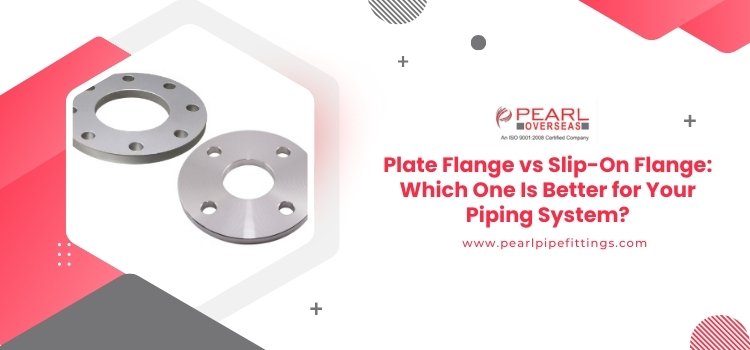
Understanding the Right Flange Choice for Industrial Piping Systems
Choosing the right type of flange is vital in any piping system, particularly for large industrial projects involving construction heads, architects, and contractors. When comparing plate flange vs slip-on flange, engineers need to determine which offers superior strength, reliability, and installation efficiency for a particular application. The two types of flanges are very common in pipelines across industries such as construction, oil and gas, power plants and water treatment centers.
Knowledge of the difference between plate flange and slip-on flange assists the decision makers in selecting the appropriate component that would be applicable in the long run, in regard to performance and safety. All flanges possess a structural design, mode of installation and cost implication. Although plate flanges can be considered simple and inexpensive, slip-on flanges are more favorable due to their ability to be easily aligned and welded. In massive infrastructure projects, where durability and performance of the operational functionality are paramount, plate flange vs slip-on flange in pipeline systems may largely influence the maintenance cost, system integrity and general project achievement.
Difference Between Plate Flange and Slip-On Flange
The difference between a plate flange and a slip-on flange is mostly in the design and mode of installation.
Plate Flange
A plate flange is a circular disc, which is flat and has holes for bolts connecting the pipes by welding. It is not a hub or necked weld and is normally welded to the pipe.
Key characteristics:
- The design of the flat plate has no raised hub.
- Pipe is spliced and welded on the flange.
- Less complex structure and construction.
- Usually more economical.
Plate flanges are usually applied in low to medium-pressure applications.
Slip-On Flange
The slip-on flange is made to come over the pipe, and then it is welded. It is internally slightly greater in diameter than the pipe.
Key characteristics:
- Pipe slips inside the flange.
- Both internally and externally welded.
- Faster alignment in the course of installation.
- A little more expensive than plate flanges.
This design enhances stability in some pipeline systems.
Plate Flange vs Slip-On Flange in Pipeline Systems
In the determination of plate flange vs slip-on flange in pipeline systems, there are various performance aspects that the engineers consider.
Installation
The flanges with slip-ons are relatively simpler to install since the pipe fits into the flange, and then welding is done.
Advantages of slip-on installation:
- Launching quicker during installation.
- Easier pipe positioning.
- Risk of misalignment is lowered.
Plate flanges, on the other hand, must be welded more accurately.
Strength and Pressure Handling
Slip-on flanges normally offer more powerful joints as a result of two welds.
Performance comparison:
Slip-On Flange
- Increased integrity of structure.
- Increased pressure and vibration resistance.
- Applicable to medium-pressure pipelines.
Plate Flange
- Good standard industrial pipeline strength.
- Most appropriate in those cases when pressure is low.
Plate Flange Advantages and Disadvantages
The knowledge of the plate flange advantages and disadvantages can assist contractors in choosing the most viable alternative in undertaking a specific project.
Advantages of Plate Flanges
- Cost-effective manufacturing.
- Simple design.
- Simple availability in different sizes.
- Appropriate in case of pipeline connections.
It is due to these advantages that plate flanges are common in construction and industrial plants.
Disadvantages of Plate Flanges
- Poor pressure tolerance in comparison with slip-on flanges.
- Not very strong in high-pressure situations.
- Welding has to be done properly during installation.
Due to these restrictions, plate flanges are less often applied in the less demanding applications.
Which Flange Is Better: Plate or Slip-On?
The which flange is better plate or slip-on determination is answered by the project requirements, pressure conditions and complexities in the installation.
Choose Plate Flange When:
- The pipeline is of low pressure.
- Budget limitations are significant.
- The design flange needed in the system is simple.
- It is used in water lines, ventilation systems or in light industrial pipelines.
Choose Slip-On Flange When:
- Its piping system needs to be stronger.
- There is the existence of moderate pressure or temperature conditions.
- It is desirable during installation that there is flexibility in alignment.
- Joints of industrial systems need to be more reliable.
To most of the engineers who need to make a decision between plate flange vs slip-on flange which is better, the ultimate choice is usually to weigh between the expense, performance and the ease of installation.
Factors to Consider When Selecting a Flange
The considerations made by engineers and project managers before deciding between these types of flanges include:
1. Pressure Rating
Systems with a higher pressure generally have better flange connections.
2. Installation Complexity
Slip-on flange is cheaper and simpler to fit in a large piping network.
3. Budget Considerations
Plate flanges tend to be more cost-effective.
4. Application Environment
Strenuous conditions could demand more rigid welding bonds.
All these factors will guarantee that the selected type of flange will sustain the pipeline in the long run.
Conclusion
To conclude, plate flange vs slip-on flange are concepts that can be used in selecting the appropriate component of a piping system. Plate flange and slip-on flange mainly depend on design, implementation technique, and performance capacity to distinguish between the two. Plate flanges are also economical and simple to use in low-pressure pipelines; however, the slip-on flanges are better in moderate-pressure pipelines as far as strength, ease of alignment and reliability are concerned. To the construction heads, the architects and the contractors in charge of complex constructions in the infrastructure, thorough assessment of these flanges will enable the provision of safe, efficient, and durable installations of piping.
FAQs
Q1. What is the main difference between a plate flange and slip-on flange in pipelines?
Their design and mode of installing is the primary differences. Flanges (plates) are disc-shaped and welded directly to pipes, whereas slip-on flanges slide around the pipe and are welded on both sides, giving them a stronger connection.
Q2. Which flange is better for industrial piping systems?
It will depend on the usage. Slip-on flanges are more suitable for use in moderately pressure pipelines due to their stronger joints, whereas plate flanges can be used in low-pressure systems where economy in cost is a concern.
Q3. Where are plate flanges commonly used?
Plate flanges are normally utilized in water pipelines, ventilation, construction piping networks, and industrial applications that are not in need of high-pressure resistance.
Looking for reliable industrial piping components for your project? Discover the right solution with expert guidance on plate flange vs slip-on flange and choose the best option for your piping system. Contact us today or email us at export@pearlpipeindia.com our team today to discuss your requirements and get professional support for high-quality flanges and piping materials.