
The Growing Need for Reliable Materials in Demanding Industrial Systems
Current industrial and construction works are highly diverse in the pipeline construction that not only has to maintain high pressure and withstand extreme temperatures but also corrosive conditions. Under these arduous circumstances, the selection of the appropriate material becomes very crucial for safety, performance, and durability. This is the very reason why stainless steel pipe fittings are essential in high-pressure conditions in industries like petrochemical plants, energy plants, huge construction projects, and manufacturing units.
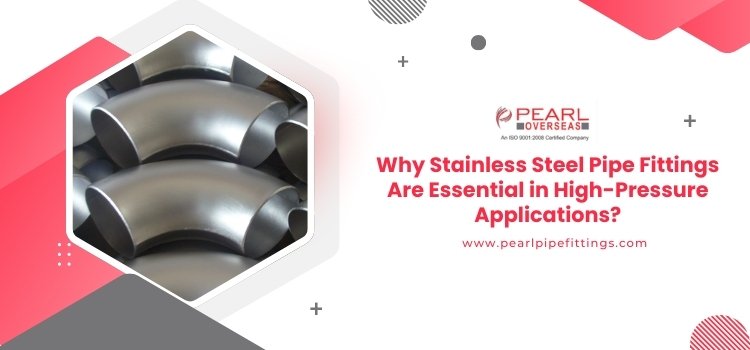
Stainless steel pipe fittings are specifically designed to retain structural integrity even in extreme working environments. Their resilience, conquest against corrosion and thermal stress make them an engineer, contractor and architectural favourite when dealing with high-performance infrastructures. High-pressure stainless steel pipe fittings are used in pipelines of chemicals or in high-pressure steam in power plants, as they are able to provide leak-free connections with long service life.
Knowing the advantages of stainless steel pipe fittings in high-pressure jobs can enable the project leaders to select a stable material that will reduce the cost of maintenance and enhance the safety of the working environment.
High-Pressure Stainless Steel Pipe Fittings for Industrial Safety
The major factor that makes engineers use high-pressure stainless steel pipe fittings is that they can withstand severe working conditions without compromising.
Fittings in high-pressure piping systems help connect the various sections of pipe, control flow direction, and provide a tight seal. Stainless steel has the ability to resist normal stress on the system as it remains intact.
Key advantages include:
- Extreme pressure loads that are supported by high tensile strength.
- Fine deformation resistance to mechanical stress.
- Leak-free connections that minimize the risk of system failure.
- Ability to work long shifts and survive in harsh working conditions.
These characteristics make stainless steel fittings a solid option for pipelines used to transport steam, gas, chemicals, or high-pressure liquids.
Benefits of Stainless Steel Pipe Fittings in High-Pressure Applications
Stainless steel pipe fittings have more than just sheer strength as an advantage in high-pressure applications. They also render resistance to environmental and chemical damage that may undermine other materials.
Major benefits include:
- Corrosion resistance: Stainless steel can withstand rust and oxidation even in moist or chemically prone environments.
- Temperature tolerance: Numerous systems include high temperature and high pressure. Stainless steel is a good material in either scenario.
- Structural stability: It is the characteristic that the material has no significant change in shape or mechanical properties with constant loading.
- Minimal maintenance needs: A lower rate of corrosion and wear leads to fewer parts replacements and repairs.
In the case of 24-hour industries, these advantages are directly translated into less downtime and lower long-term expenditure.
Stainless Steel Pipe Fittings Advantages in Industrial Applications
The benefits of using stainless steel pipe fittings in industries are especially evident in those industries where safety and efficiency are the most important factors.
Some of the industries that are heavy dependents of stainless steel fittings will include:
- Oil and gas processing plants.
- Manufacturing plants of chemicals.
- Power generation plants.
- Mass building operations.
- Food and drug processing departments.
Stainless steel fittings are used in these industries to facilitate stable flow systems and ensure that safety and performance standards are met.
For contractors and architects working on industrial infrastructure, the choice of stainless steel fittings will make the piping network reliable, even under constant pressure.
Why Stainless Steel Pipe Fittings Are Used in High-Pressure Systems?
The reason for using stainless steel pipe fittings in high-pressure systems is to consider the mechanical properties of stainless steel itself.
Stainless steel has the characteristic combination of strength, ductility, and corrosion resistance. These properties enable the pipe fittings to withstand pressure and temperature changes without cracking or weakening.
Important reasons include:
- High-pressure-handling ability.
- Chemical resistance and oxidation resistance.
- Sealing integrity capability.
- Ability to be interchangeable with other pipe systems.
These are the qualities that enable stainless steel fittings to be the best option for engineers in the design of important piping networks.
High-Pressure Pipe Fittings for the Petrochemical Industry
The extremely demanding standards required of high-pressure pipe fittings in the petrochemical industry are very high. Volatile chemicals, gases, and fuels that the petrochemical plant transports require durable, safe piping systems.
The use of stainless steel pipe fittings in petrochemical plants is common due to the following reasons:
- Tolerance to offensive chemicals.
- Performance at extreme pressure conditions.
- Extreme service in corrosive conditions.
- Excellent welding and flexibility of fabrication.
All of these features help prevent leakage and preserve operational efficiency and safety regulations within the industry.
High Temperature Stainless Steel Fittings in Critical Systems
Numerous high-pressure regimes work under high temperatures. Here, stainless steel fittings for high temperatures are necessary.
Stainless steel does not lose its mechanical strength even at high temperatures, unlike many other traditional metals.
Common uses are:
- Power plants and steam pipelines.
- Boiler systems.
- Heat exchangers.
- Processing plants and factories.
Stainless steel fittings have the ability to sustain high-pressure and high-temperature conditions, making industrial functions safe and effective.
Conclusion
To sum up, pipe fittings made of stainless steel are very important in ensuring that piping systems are safe and efficient in high-pressure conditions. Their high strength, resistance to corrosion and the capability to withstand high temperature conditions make them a perfect product when dealing with some of the most demanding industries, like in petrochemical processing, power generation and construction on a large scale.
We discussed the way in which the high-pressure stainless steel pipe fittings are utilized to increase the safety of a system, the advantages of using stainless steel pipe fittings in a high-pressure system, and why it is commonly used in an industrial system that needs reliability and durability. To the contractor, architects and industrial decision-makers, the use of stainless steel fittings is a good choice as it guarantees longevity in terms of performance and lower maintenance costs in the critical infrastructure projects.
FAQs
Q1. What makes stainless steel pipe fittings suitable for high-pressure industrial systems?
With stainless steel, fitting of pipes is appropriate since they offer high tensile strength, resistance to corrosion and can withstand pressure changes and changes in temperature. These characteristics aid in sustaining leak-free connections in harsh conditions.
Q2. Where are high-pressure stainless steel pipe fittings commonly used?
Stainless steel pipe fittings that are high-pressure are common in petrochemical facilities, oil and gas pipelines, power plants, chemical industries, and major construction projects in various industries.
Q3. Do high-temperature stainless steel fittings perform well in extreme environments?
Yes. Stainless steel fitting. High-temperature stainless steel fittings offer structural integrity and corrosion resistance even when in extreme temperatures and are not only suitable for boilers, steam pipelines, and industrial processing systems.
Looking for durable high-pressure stainless steel pipe fittings for your industrial or construction project? Connect with a trusted supplier today to ensure reliable performance, safety, and long-term efficiency in your piping systems. Contact us now to discuss your requirements, or email us at export@pearlpipeindia.com.