
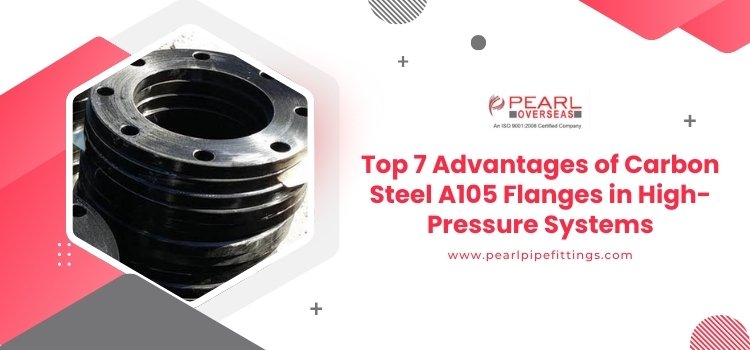
Why Carbon Steel A105 Flanges Are Essential in Modern Piping Systems
Selecting the right material for a large-scale industrial project is a critical decision. Infrastructure such as oil and gas pipelines, power generation plants, and commercial buildings requires piping connections that are durable, reliable, and capable of a long operational life. For construction heads, marine architects, and piping contractors, understanding the advantages of Carbon Steel A105 flanges is useful for designing secure, high-pressure systems.
Because forged carbon steel A105 flanges offer a solid balance of mechanical strength and cost-effectiveness, they’re a common industry choice for pressure piping systems. When evaluating flanges, project decision-makers weigh temperature handling capacity, durability, and international standardization. Carbon steel ASTM A105 flanges meet these requirements without straining project budgets. Understanding why an A105 flange is specified helps teams make informed decisions on major infrastructure projects.
What Are ASTM A105 Carbon Steel Flanges?
ASTM A105 carbon steel flanges are forged pipe flanges manufactured to meet the ASTM A105 material specification. They’re designed for ambient and high-temperature service within high-pressure systems.
Key characteristics of A105 flanges include:
- Manufactured from forged carbon steel, not cast
- Engineered for high-pressure industrial applications
- Compatible with ASME B16.5 and ANSI dimensional standards
- Widely used for connecting valves, heavy fittings, and pressure vessels
These characteristics make them a common choice for industries where safety and pipeline performance matter most.
1. High Strength and Extreme Pressure Resistance
A defining benefit of an A105 carbon steel flange is its mechanical strength. The forging process aligns the steel’s grain structure, which helps it support internal pressure and mechanical stress.
Pressure-related benefits:
- Strong tensile strength for heavy-duty pipeline operations
- Handles hydraulic pressure spikes well
- Reduces the risk of joint leaks or flange failure
For operations managers and pipeline contractors, this strength supports safer facility operations and fewer emergency shutdowns.
2. Good Performance at High Temperatures
Carbon steel A105 flanges are developed to maintain structural integrity under elevated temperature conditions, which suits thermal power generation, petrochemical processing plants, and oil refineries.
Why thermal stability matters:
- Maintains structural integrity in high-heat environments
- Reduces metal deformation and warping under thermal stress
- Supports a longer lifespan under fluctuating ambient conditions
Industrial architects favor A105 flanges because temperature cycling doesn’t easily compromise the pipeline’s seal.
3. A Cost-Effective Solution for Large Projects
Cost is another meaningful benefit. A105 forged carbon flanges are generally less expensive than premium alloy or specialized stainless steel flanges, while still meeting baseline performance requirements.
Cost-related advantages:
- Lower raw material and manufacturing costs
- Standardized sizes available globally, reducing supply chain delays
- Helps manage the overall budget of large infrastructure systems
For large buildings and commercial pipelines, specifying A105 carbon steel can free up part of the construction budget without sacrificing safety.
Common Types of ASTM A105 Flanges
High-pressure piping systems require specific flange faces and connections depending on the engineering requirement:
- Weld Neck (WN) Flanges: suited to high pressures and fluctuating temperatures
- Slip-On (SO) Flanges: a cost-effective, easy-to-weld option for lower-pressure applications
- Blind Flanges: used to permanently or temporarily seal the ends of piping systems and valves
- Socket Weld (SW) Flanges: suited to smaller-diameter, high-pressure pipelines
4. Wide Compatibility and Global Standardization
Carbon steel A105 flanges generally meet common international dimensional standards, including ASTM, ASME, and ANSI, which helps a new flange integrate into existing piping systems.
Standardization advantages include:
- Interchangeability with older system components
- Available across a wide range of pressure classes, Class 150 to Class 2500
- Faster installation with corresponding standard pipes and valves
This standardization simplifies procurement and reduces downtime for contractors working on time-sensitive repairs.
5. Good Machinability and Fabrication
From a fabrication standpoint, carbon steel A105 is comparatively easy to machine, weld, and structurally alter compared to harder metal alloys.
Fabrication benefits:
- Reliable weldability for secure joints
- Suitable for custom CNC machining for specialized fittings
- Well suited to on-site structural changes
This flexibility matters during the modernization of existing pipelines or the construction of custom industrial plants.
Reliable Performance Across Core Industries
Thanks to their balanced properties, forged carbon steel A105 flanges are used across a range of industries:
- Upstream and downstream oil and gas
- Petrochemical and chemical processing
- Thermal and nuclear power generation
- Large-scale water treatment facilities
- Heavy infrastructure and commercial construction
Conclusion
ASTM A105 carbon steel flanges offer a practical combination of mechanical strength, pressure resistance, thermal stability, and cost efficiency. Understanding the conditions they’re built for, and their role in global standardization, explains why they remain a common choice for pressure piping systems. For construction heads, architects, and piping contractors, specifying A105 carbon steel flanges supports project safety, durability, and long-term value.
FAQs
Q1. Why are Carbon Steel A105 flanges so frequently used in the oil and gas industry?
Oil and gas pipelines transport pressurized fluids over long distances, and A105 flanges are favored in this sector because the forged carbon steel provides strong resistance to high pressure, good durability, and reliable performance across a wide temperature range.
Q2. Can A105 forged flanges be safely used in high-temperature services?
Yes. Carbon steel A105 flanges are manufactured for both ambient and high-temperature services, which is why they’re widely used in thermal power plants, industrial boilers, and petrochemical refineries.
Q3. Why is Carbon Steel A105 considered an economical flange choice for large pipelines?
A105 balances strength and cost well. Lower raw material cost, wide global availability, and a long service life help reduce the total capital expenditure of a project, making it a common choice for large-scale infrastructure and industrial construction.
Looking to source certified Carbon Steel A105 flanges for your high-pressure piping systems? Contact us today or email us at export@pearlpipeindia.com for engineering guidance, bulk pricing, and supply solutions for your next project.