
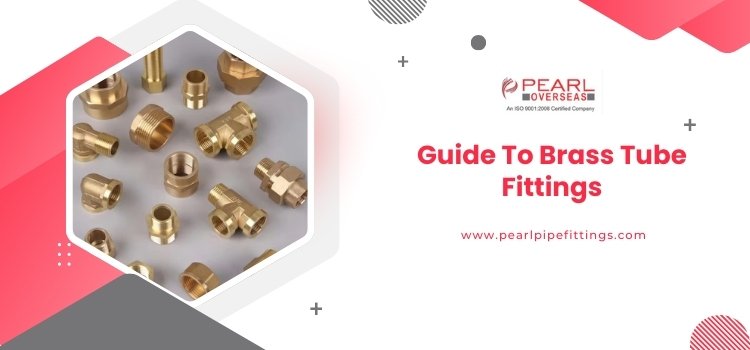
Understanding the Role of Brass Tube Fittings in Modern Systems
Fittings of brass tube have gained significance in all fields of plumbing, HVAC, gas distribution, refrigeration, and some industrial systems. Their consistency in performance under pressure, levels of corrosion, and reliability are the reasons why they are a favorite among builders, contractors, and project managers. As one delves into a Ultimate Guide to Brass Pipe Fittings, it is evident that they are a lot more than straight connectors; they facilitate the efficiency of the system, safety, and construction and infrastructure network longevity.
Why Brass Tube Fittings Are Widely Used in Industrial and Construction Projects?
Brass tube fittings are selected where there is a high demand because they offer high mechanical strength and high service life. They are favoured by builders and architects as they can stand high pressure, are resistant to corrosion, and also work well with hot and cold fluids.
Key Advantages of Using Brass Tube Fittings
- High anti-rust and anti-chemical corrosion resistance.
- Simple machinability to ensure its installation is made accurately.
- Good working conditions in different temperatures.
- Long life cycle and minimisation of replacement and maintenance.
- Fastened with copper, brass, and some plastic pipes.
Types of Brass Tube Fittings Used in Different Industries
Compression Fittings for Leak-Free Connections
Compression fittings are common with plumbing and gas lines, where secure and leak-proof joints are necessary. They provide a good fit without welding and soldering.
Common applications:
- Residential plumbing lines
- Fittings of gas pipes in the kitchens.
- HVAC controls and refrigeration.
Flare Fittings for High-Pressure Systems
The flare fittings are suitable for high-pressure conditions. They offer good mechanical retention as well as increased sealing power.
Advantages:
- Very good vibration resistance.
- Fuel line and gas distribution are appropriate.
- Well-developed temperature tolerance.
Push-to-Connect Fittings for Fast Installation
Such fittings are valued because of the minimisation of time of installation time. They do not need any tools and are therefore suitable when a large construction project is involved.
Used in:
- Temporary water lines.
- Low-pressure air systems.
- Modular building structures.
Applications of Brass Tube Fittings in Construction & Industrial Systems
Plumbing and Water Supply Networks
Brass tube fittings are still the best-selling fittings to plumbing contractors because of their resistance to corrosion and use in high-moisture areas.
HVAC and Refrigeration Lines
The keywords become secondary, like HVAC brass fittings, refrigeration tube connectors, and industrial brass connectors. The fittings are made of brass tubes that assist in the control of flow and temperature.
Gas Piping Systems
Their pressure and ability to resist leakage, and in addition to that, they are tough, which gives them an advantage in commercial gas pipelines, industrial burners, as well as pressure-controlled systems.
Heavy Machinery and Manufacturing
The usage of brass tube fittings in industries is due to the fact that they can offer long flow control services of lubricants, coolants, and hydraulic fluids.
How to Select the Right Brass Tube Fittings for Your Project?
It is necessary to make the correct choice of the fitting to ensure the efficiency and reliability of the systems in the long term.
Key Selection Factors
- Fluid type: Gas, air, water, chemicals.
- Pressure rating: match-making strength with system need.
- Temperature range: take into account both operational and ambient heat.
- Pipe size compatibility: make sure that they are perfectly aligned.
- Standards of the industry: adhere to ASTM and ISO standards.
Where Brass Tube Fittings Offer Best Value?
- Large commercial buildings
- Industrial plants
- Mechanical rooms
- Gas distribution networks
- Infrastructure projects
Maintenance Tips for Brass Tube Fittings
Although the brass offers a long service life, regular examination is used in order to sustain the performance.
- Recommended Practices.
- Check joints to see little leakage.
- Clean up outer surfaces to prevent the buildup of dust.
- Change deteriorated seals on a regular basis.
- Install appropriate tools and torques.
Conclusion
This Guide to Brass Tube Fittings discusses their benefits, uses, and functions in the plumbing, HVAC, gas networks, and industrial projects. We discussed the types of fittings and where they are applied, and the types of fittings to be selected to achieve long-lasting reliability. To contractors, architects, and construction leaders, the knowledge of such fittings can be used to construct more efficient systems that are stronger and safer.
FAQs
Q1. What is the ideal kind of brass tube fitting to use in high-pressure gas high pressure systems?
Flare fittings are thought to be the best when high-pressure gas is used since they provide a tight mechanical seal and high vibration.
Q2. What is the life expectancy of brass tube fittings used in construction?
With proper environments like HVAC systems, plumbing, and industrial fluid systems, high-quality brass fittings have a lifespan of several decades.
Q3. Do Brass tube fittings apply to both hot and cold lines?
Yes, the fittings are made of brass, which works well in a broad temperature bracket, thus applies to both hot and cold water supply systems.
Ready to choose reliable brass tube fittings?
Get expert guidance, find trusted suppliers, and pick the right products for your industrial or construction project.
Email us at export@pearlpipeindia.com or contact us today to find the best brass tube fittings for your next big build!