
Understanding the Importance of Pipe Fittings in Modern Industries
Different Types of Pipe Fittings are critical in the joining, direction and regulation of the flow of liquids and gases in a broad spectrum of industries. It can be building, heating and ventilation systems, chemical processing plants, oil and gas facilities or simply the daily water supply systems; the fitting is to be selected to provide efficiency, safety and longevity. A discussion on the subject of pipe fittings, including its materials, grades, and applications in practice, can be useful to point out how these very small parts can have such a significant effect on the dependability and performance of a huge, complicated machine.
Types of Pipe Fittings
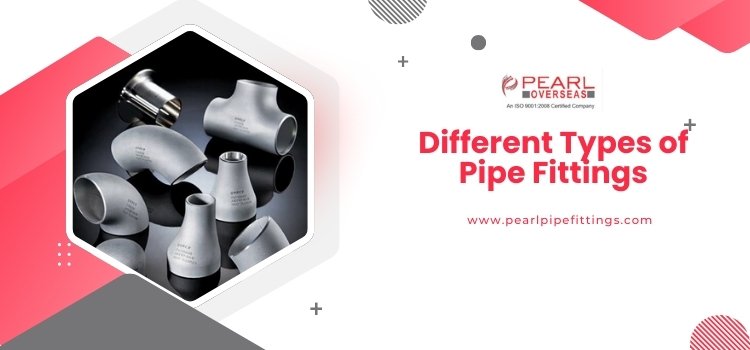
Pipe fittings come in a variety of shapes and uses. Common categories include:
- Elbows
- Tees
- Reducers
- Couplings
- Caps & Plugs
- Unions
- Flanges
- Adapters
These fittings support system integrity, adjust flow direction, and enable maintenance operations.
Material Types Used in Pipe Fittings
Stainless Steel Pipe Fittings
Stainless steel fittings possess a broad range of uses in which they are needed due to their resistance to corrosion and high strength.
Advantages:
- Excellent durability
- Food-grade environment is hygienic.
- Unsensitive to extreme temperatures.
Applications:
- Chemical plants
- Food & beverage processing
- Marine systems
Carbon Steel Pipe Fittings
Carbon steel fittings are characterised by their hardness and capacity to resist a lot of pressure.
Advantages:
- Cost-effective
- High tensile strength
- Ideal for heavy-duty usage
Applications:
- Oil & gas pipelines
- Power plants
- Industrial machinery
Copper Pipe Fittings
The copper pipe fittings are famous due to their thermal conduction and dependability.
Advantages:
- Long-lasting
- Easy to install
- Ideal for heat transfer systems
Applications:
- Residential water supply
- HVAC industries
- Refrigeration systems
Brass Pipe Fittings
Flexibility and resistance to corrosion are some of the features that are attributed to brass in terms of plumbing.
Advantages:
- Strong sealing capability
- It can be used in cold water and hot water.
- Resistant to rust
Applications:
- Plumbing networks
- Gas distribution lines
Grades of Pipe Fittings
Stainless Steel Grades
- 304/304L – Commercial grade of general application.
- 316/316L – High corrosiveness, suitable for marine and chemical industries.
Carbon Steel Grades
- ASTM A105 – Used in forged fittings.
- ASTM A234 WPB – This is used in cold and hot applications.
Copper Grades
- ASTM B88 – Plumbing-grade
- L, M, K – Copper tubing based on the level of pressure.
Applications Across Major Industries
Various heavy industries need the pipe fittings of the pipe fitting specifically in areas where precision, durability, and pressure handling are of concern.
- Construction Building Infrastructure: Applied in water lines, fire systems, HVAC units, and drainage lines.
- Oil & Gas Sector: Fittings made of high-strength carbon steel offer high performance at high pressures.
- Pharmaceutical and Chemical Plants: Stainless steel grades are pure and have corrosion resistance.
- Food Processing Industry and Beverage Industry: As a top fitting, stainless steel fittings are hygienic.
- Household and Commercial Plumbing: Copper and brass fittings will ensure long life and prevent leaks.
Conclusion
In this elaborate elaboration on the Types of Pipe Fittings, Materials, Grades, and Applications Explained, we have discussed the various types of fittings, the materials of which it is composed, the grades that determine their performance, and the industries that will not do without them. All the fittings have their own functions in the construction of effective, safe, and durable pipeline systems. Be it construction, manufacturing, or infrastructure design, the knowledge of these components guarantees improved decision-making, safety, and cost-effectiveness.
FAQs
Q1. What are some of the most prevalent pipe fittings to use in the industrial context?
The most common fittings are those of elbows, tees, reducers, unions, flanges, and couplings. These fittings assist in the control of the flow direction, adjustment of the pipe size, as well as facilitate the smooth functioning of the systems.
Q2. What material is the most appropriate in high-corrosion conditions?
Stainless steel fittings, particularly grade 304 and 316, have better corrosion resistance and are used in the marine industry, chemical industry, and food processing industries.
Q3. What is the correct selection of the grade of pipe fittings?
Select depending on pressure needs, temperature, and fluid type. Stainless steel grades are also the best when in a corrosive environment; carbon steel grades A105 and A234 WPB are used when there is high pressure.
Looking for reliable pipe fittings for your next industrial project? Get high-quality solutions designed for performance and longevity.
Contact us today at: export@pearlpipeindia.com