
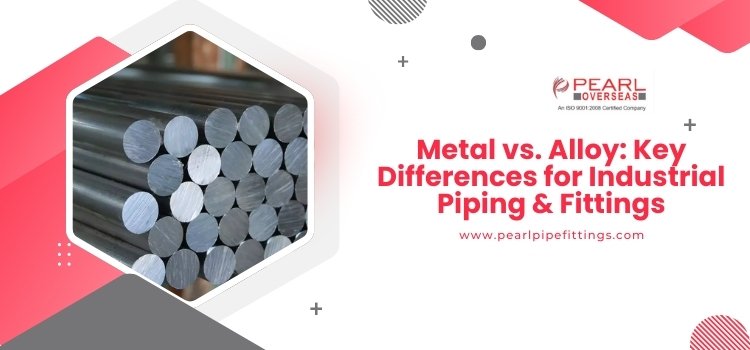
When selecting materials for large-scale engineering projects, one of the most fundamental questions engineers ask is the metal vs alloy comparison. While these terms are often used interchangeably in casual conversation, in the world of industrial manufacturing, construction, and pipeline engineering, they are vastly different. Knowing the exact difference between metal and alloy allows project managers to select the correct material to maximize strength, corrosion resistance, and long-term performance.
In this guide, we break down the most critical differences, compare their core properties, and explain exactly why the industrial pipeline sector overwhelmingly relies on engineered alloys rather than pure metals.
What Are Metals?
Metals are naturally occurring, pure chemical elements retrieved directly from the Earth’s crust. In their purest forms, they contain only one type of atom.
Common examples of pure metals include:
- Iron (Fe)
- Copper (Cu)
- Aluminium (Al)
- Gold (Au)
- Nickel (Ni)
Key Characteristics of Pure Metals:
- Solid state at room temperature (with the exception of Mercury).
- Extremely high electrical and thermal conductivity.
- Naturally shiny, lustrous appearance.
- Highly malleable (can be hammered flat) and ductile (can be drawn into wires).
Common Uses of Pure Metals:
| Pure Metal | Typical Industrial Applications |
|---|---|
| Aluminium | Aircraft manufacturing, lightweight consumer goods, packaging. |
| Copper | Electrical wiring, motors, and light-duty residential plumbing. |
| Iron | Basic tools, heavy machinery frames, foundational structural support. |
What Are Alloys?
An alloy is a man-made combination of a primary base metal mixed with other metallic or non-metallic elements. This engineering process is done specifically to eliminate the natural weaknesses of the base metal, drastically improving its durability, hardness, or performance.
Common examples of alloys include:
- Steel: Iron + Carbon
- Brass: Copper + Zinc
- Bronze: Copper + Tin
Key Characteristics of Alloys:
- Significantly stronger and harder than the pure base metal.
- Engineered for massively improved resistance to rust and chemical corrosion.
- Customizable melting points and tensile strengths tailored to specific industrial requirements.
Common Applications of Alloys:
- High-rise buildings and suspension bridges (Carbon Steel).
- Marine and deep-sea instruments (Bronze).
- High-pressure valves and heavy-duty industrial pipe fittings (Stainless Steel, Brass).
The Core Difference Between Metal and Alloy
Understanding the exact differences helps contractors make cost-effective material choices.
| Feature | Pure Metal | Alloy |
|---|---|---|
| Composition | A single, pure chemical element. | A deliberate combination of multiple elements. |
| Overall Strength | Moderate to low (often soft). | Exceptionally high (engineered for toughness). |
| Corrosion Resistance | Highly prone to rust, oxidation, and degradation. | Highly resistant to rust, acids, and chemical attacks. |
| Melting Point | Fixed and exact. | Variable, depending on the exact material mixture. |
| Cost | Generally cheaper to refine. | Usually more expensive due to processing and added elements. |
Why Are Alloys the Standard in Industrial Pipe Fittings?
If you look at modern oil refineries, water treatment plants, or chemical factories, pure metals are almost never used for pipelines. This is exactly why engineered alloys, such as Stainless Steel 304L, 316L, and ASTM A105 Carbon Steel, completely dominate the market.
1. Resistance to Atomic “Slip” (Increased Hardness)
In a pure metal, atoms are identically sized and arranged in perfect, uniform layers. Under pressure, these layers easily slide (“slip”) over one another, causing the pipe to bend, warp, or snap. In an alloy, the highly varied atomic sizes of the mixed elements act as locking speed bumps. This prevents the layers from sliding, making an alloy fitting exponentially stronger.
2. Surviving Highly Corrosive Conditions
A pure iron pipe carrying harsh acidic fluids would rust from oxidation and completely disintegrate within months. By alloying iron with elements like Chromium and Nickel, we create Stainless Steel. The chromium quickly forms an invisible “passive layer” over the metal, permanently shielding the fitting from acid attacks and saltwater corrosion.
3. Extreme High-Pressure Safety
Industrial pipe fittings must repeatedly contain massive internal hydraulic and gas pressures without bursting. The alloying process drastically increases the “Yield Strength” of the material, allowing forged flanges and elbows to remain flawlessly intact under thousands of pounds of pressure.
Conclusion
The difference between metal and alloy comes down to nature versus engineering. While pure metals offer incredible natural properties like conductivity, engineered alloys take those base metals and refine them into stronger, safer, and far more durable industrial products. For heavy-duty manufacturing and piping networks, selecting premium alloys over pure metals is the only way to ensure lifelong structural integrity.
FAQs
Q1. What is the main difference between metal and alloy?
The main difference is their physical composition. Metals are naturally occurring, pure chemical elements (like pure iron or copper) with distinct conductivity properties. Alloys are man-made mixtures of a primary base metal and other elements (like steel or brass) engineered specifically to boost hardness, strength, and corrosion resistance.
Q2. Which is structurally stronger: a pure metal or an alloy?
Alloys are significantly stronger than pure metals. The process of mixing different elemental atoms locks the atomic layers in place, preventing the material from bending or cracking under heavy stress.
Q3. Why are pure metals rarely used in industrial piping?
Pure metals are generally too soft and highly susceptible to rapid oxidation (rusting) and pressure deformation. Engineered alloys are preferred because they eliminate these weaknesses, offering high-pressure safety and intense chemical corrosion resistance.
Do you need help selecting the perfect engineered materials for your next high-pressure industrial system? Our team is here to help you design safer, stronger, and longer-lasting installations. Contact Us today or email us directly at export@pearlpipeindia.com for expert pipeline guidance and premium alloy fittings.